

CAT FOOD FOR KITTENS
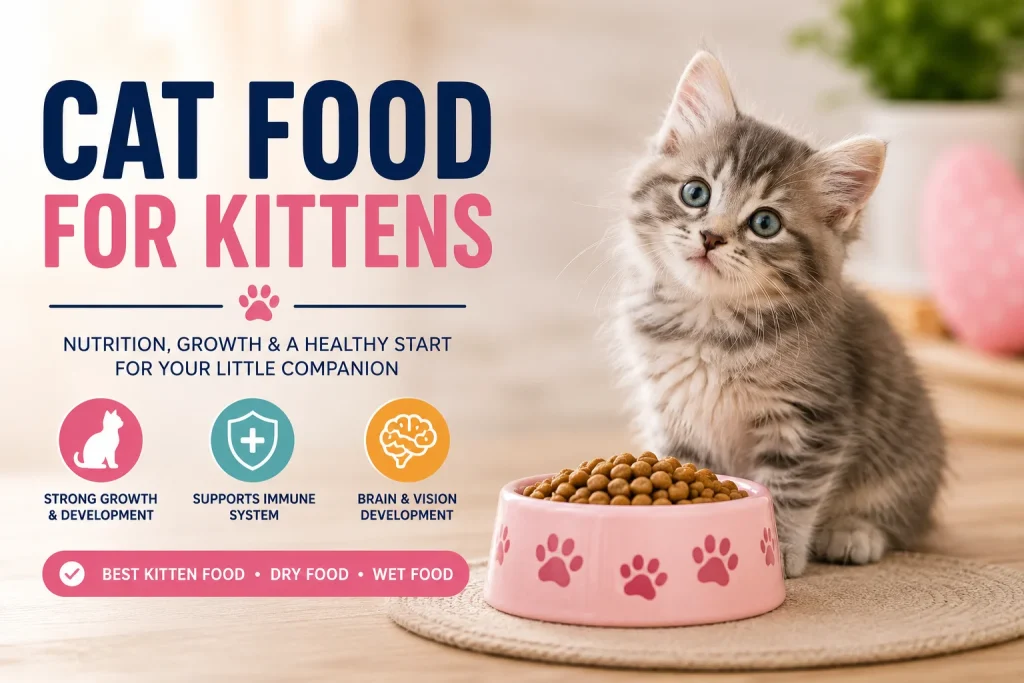
Cat Food for Kittens: A Complete Guide to Healthy Growth
Giving your kitten the right nutrition is one of the most important steps toward a healthy and active life. Choosing the right cat food for kittens helps support strong bones, healthy muscles, brain development, and a strong immune system. Since kittens grow quickly during their first year, they need food that is specially designed to meet their nutritional needs.
Why Is Special Cat Food for Kittens Important?
Unlike adult cats, kittens require more calories, protein, vitamins, and minerals to support their rapid growth. High-quality cat food for kittens provides balanced nutrition that helps them develop into healthy adult cats.
A kitten’s diet should include:
- High-quality protein
- Healthy fats
- Essential vitamins and minerals
- DHA for brain development
- Calcium for strong bones and teeth
How to Choose the Best Kitten Food
Selecting the best kitten food can be challenging because there are many options available. Look for products that contain real meat as the first ingredient and avoid foods with unnecessary fillers or artificial preservatives.
A quality kitten food should offer:
- Complete and balanced nutrition
- High protein content
- Natural ingredients
- Easy digestibility
- Age-specific formula
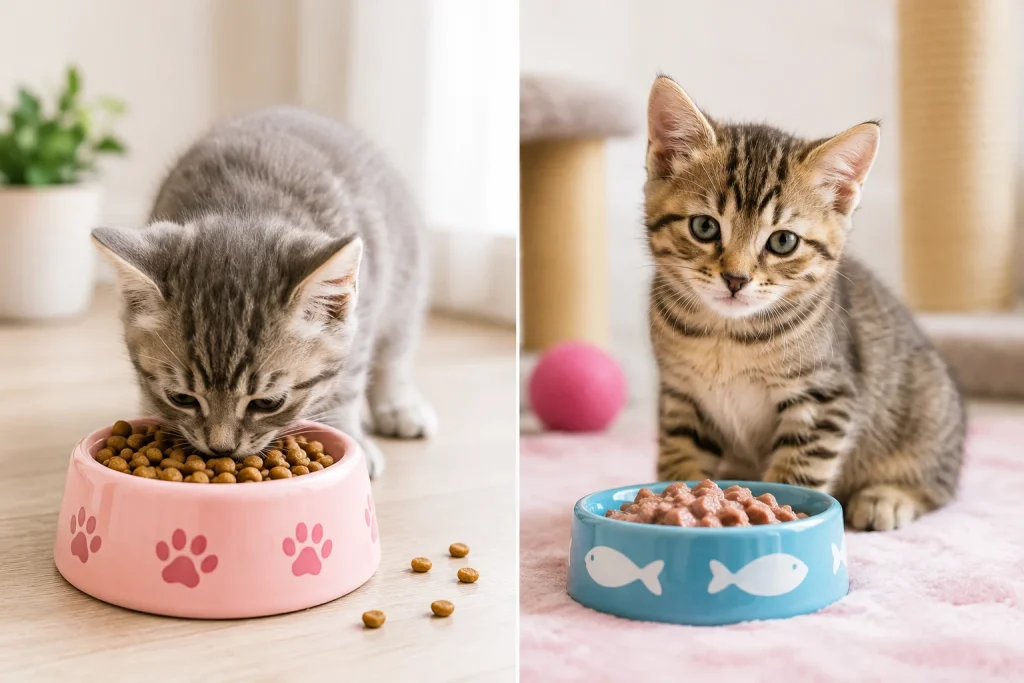
Benefits of Kitten Dry Food
Dry food can be a practical option for kitten owners because it is simple to measure, store, and serve. When kittens chew appropriately sized dry food, the texture may also help reduce some plaque accumulation on the teeth.
Some advantages of kitten dry food include:
- Convenient to store for longer periods
- Simple to measure into appropriate portions
- Easy to serve during daily feeding
- Generally economical for regular use
- Provides a convenient feeding option for busy owners
Why Include Kitten Wet Food?
Kitten wet food can be a useful part of a young cat’s diet because it contains considerably more moisture than dry food. Its softer texture can also make it easier for young kittens to eat, particularly during the transition from milk to solid foods.
Potential benefits include:
- Increased water intake
- Soft and easy-to-eat texture
- Appealing flavor for many kittens
- Suitable for kittens that find dry food difficult to chew
- An additional source of moisture in the daily diet
Feeding Guidelines for Growing Kittens
Young kittens have small stomachs but require regular nourishment as they grow. Instead of offering one large meal, divide their daily food into several smaller servings.
Keep these points in mind:
- Offer several small meals throughout the day according to the kitten’s age.
- Keep clean, fresh water available at all times.
- Use the feeding instructions provided by the food manufacturer as a starting point.
- When changing foods, make the transition gradually rather than switching suddenly.
- Ask a veterinarian for guidance if your kitten has unusual nutritional or dietary requirements.
Feeding Mistakes Kitten Owners Should Avoid
Proper nutrition involves more than just selecting the right food.. Feeding habits also matter. Some common mistakes can make it harder to maintain an appropriate diet for a growing kitten.
Try to avoid:
- Introducing adult cat food before the kitten is ready
- Offering too many treats between meals
- Making sudden changes to the kitten’s regular food
- Frequently giving table scraps or human foods
- Ignoring recommended serving amounts
Conclusion
Choosing suitable cat food for kittens can make an important contribution to healthy growth and development. Both kitten dry food and kitten wet food can have a place in a balanced feeding routine, depending on the kitten’s needs and the owner’s feeding approach. The most important consideration is selecting a nutritionally complete formula made for growing kittens and following appropriate feeding guidelines.
FAQs
1. What should I look for in food for a kitten?
Look for a nutritionally complete kitten formula that provides quality protein, fats, vitamins, minerals, and other nutrients required during growth.
2. Should kittens eat dry food, wet food, or both?
Either option can be suitable when it is formulated for kittens. Some owners choose to provide both to combine the convenience of dry food with the higher moisture content of wet food.
3. At what age can kittens begin eating solid food?
Kittens generally start transitioning toward solid foods at around four weeks of age. The transition should be gradual as they become more comfortable eating on their own.
4. Is adult cat food suitable for growing kittens?
Kitten food is generally preferable because growing kittens have different nutritional requirements from adult cats. Choose a formula specifically intended for kitten growth.