


Best Cat Food for Indoor Cats
Choosing the Right Food for Your Indoor Cat
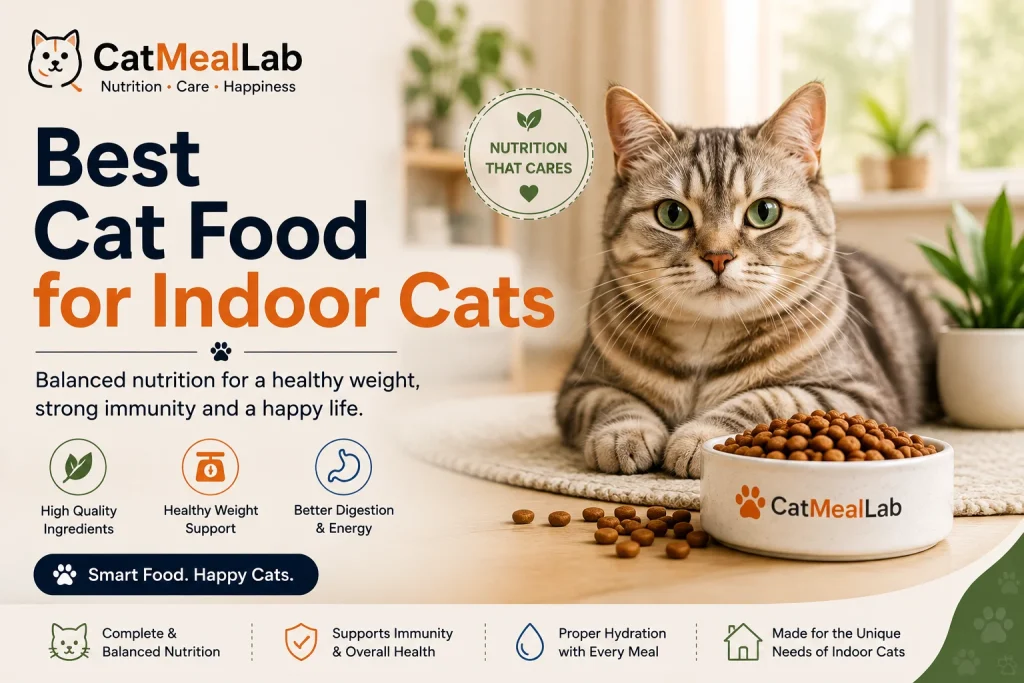
Choosing the right food is an important part of keeping an indoor cat healthy, active, and comfortable. Indoor cats often have different dietary needs because they may exercise less than outdoor cats. The best cat food for indoor cats should provide balanced nutrition while supporting healthy weight, digestion, energy, and overall well-being. At CatMealLab, we help cat owners understand their cats’ nutritional needs and make informed food choices.
Understanding Indoor Cat Nutrition
Indoor cats usually spend most of their time inside the home, which can mean less physical activity. Because of this, their daily diet should provide appropriate levels of protein, fats, vitamins, and minerals without unnecessary excess calories.
A good diet can support healthy body weight while providing the nutrients cats need for normal growth, muscle maintenance, and daily activity. Cat owners should consider their cat’s age, activity level, size, and individual nutritional requirements when choosing food.
What Should Indoor Cat Food Provide?
A nutritious diet for an indoor cat should contain several important components.
High-Quality Protein
Cats are obligate carnivores, meaning animal-based protein plays an important role in their natural nutritional requirements. Adequate protein can help support muscle maintenance and normal body functions.
When evaluating cat food, look for a nutritionally balanced formula that provides appropriate protein for your cat’s life stage and needs.
Controlled Calories
Indoor cats may burn fewer calories than highly active outdoor cats. Feeding excessive calories can contribute to unwanted weight gain.
Portion control is therefore an important part of an indoor cat’s feeding routine. The appropriate amount depends on factors such as age, body condition, activity level, and overall health.
Proper Hydration
Water is essential for cats. Some cats do not naturally drink enough water, so hydration should be considered when planning their diet.
Wet food can contribute additional moisture to a cat’s daily intake, while fresh drinking water should always be readily available.
Choosing Food According to Your Cat’s Needs
There is no single diet that is perfect for every indoor cat. A kitten, adult cat, and senior cat may have different nutritional requirements.
For example, kittens need nutrition that supports growth and development, while adult cats generally need a balanced diet that helps maintain their body condition. Older cats may have additional dietary considerations.
Your cat’s lifestyle should also be considered. A highly active indoor cat may have different calorie requirements from a cat that spends most of the day sleeping.
Wet and Dry Cat Food
Both wet and dry food can have a place in a cat’s diet when they are nutritionally complete and appropriate for the individual cat.
Wet cat food contains a high amount of moisture, which can help increase daily water intake. It may also be useful for cats that prefer softer textures.
Dry food is convenient, easy to store, and can be portioned easily. However, cats eating primarily dry food should still have continuous access to fresh water.
Some cat owners choose to combine both types. The most suitable approach depends on the cat’s preferences, nutritional requirements, feeding routine, and advice from a qualified veterinary professional when necessary.
CatMealLab’s Cat Food Guidance
At CatMealLab, our goal is to make cat nutrition easier to understand. Choosing food can be confusing when owners have to consider ingredients, nutritional balance, feeding amounts, age, activity, and individual needs.
Our cat food guidance focuses on helping owners understand these factors before making feeding decisions. We provide practical information about indoor cat nutrition, feeding habits, hydration, portion control, and different types of cat food. For older cats, you can also explore our guide to Best Cat Food for senior cats to understand their specific nutritional needs.
Instead of focusing only on a particular product, CatMealLab emphasizes the nutritional factors that can help owners make more informed choices for their cats.
Why Proper Feeding Matters
Even nutritious food needs to be provided in appropriate portions. Overfeeding can lead to excessive weight gain, while underfeeding may prevent a cat from receiving enough energy and nutrients.
Regularly observing your cat’s body condition, activity, appetite, and eating habits can help you recognize changes that may require attention.
Treats should also be given responsibly. They can be part of a cat’s routine, but they should not replace a nutritionally complete main diet.
Creating a Healthy Feeding Routine
A consistent feeding routine can make it easier to manage portions and monitor your cat’s eating habits.
Measure appropriate food portions rather than repeatedly filling the bowl without considering how much your cat consumes. Keep fresh water available throughout the day and store food properly to maintain quality.
If your cat suddenly refuses food, experiences persistent digestive problems, loses or gains weight unexpectedly, or shows other concerning changes, consulting a veterinarian is the safest approach.
Make Better Cat Food Decisions with CatMealLab
Finding suitable food for an indoor cat does not have to be confusing. By understanding your cat’s nutritional requirements, activity level, hydration needs, and appropriate portion sizes, you can build a more responsible feeding routine.
CatMealLab provides educational cat food and nutrition guidance designed to help cat owners make better-informed decisions. Our goal is to simplify complicated nutrition topics and provide useful information that cat owners can understand and apply.
Whether you are learning about wet food, dry food, portion control, or a healthy cat diet, CatMealLab can help you understand the factors that matter most.
Conclusion
A healthy indoor cat needs balanced nutrition, appropriate portions, sufficient hydration, and a feeding routine suited to its individual needs. The best cat food for indoor cats is not simply about choosing a particular product; it is about understanding nutrition and selecting food that fits your cat’s age, activity level, and dietary requirements. CatMealLab is here to provide practical cat food guidance so owners can make more informed decisions and support their cats’ long-term well-being.
Frequently Asked Questions
1. What should I consider when choosing food for an indoor cat?
Consider your cat’s age, activity level, body condition, nutritional requirements, and feeding habits. The food should provide balanced nutrition and appropriate calories for your cat’s lifestyle.
2. Is wet food suitable for indoor cats?
Yes. Nutritionally complete wet food can be part of an indoor cat’s diet and provides significant moisture. It can be especially useful for cats that do not drink much water.
3. Can indoor cats eat dry food?
Yes, provided the dry food is nutritionally complete and appropriate for the cat’s life stage and needs. Fresh drinking water should always be available.
4. How can I prevent my indoor cat from gaining too much weight?
Portion control, regular activity, and monitoring body condition are important. Avoid excessive treats and unnecessary calorie intake, and discuss significant weight changes with a veterinarian.
5. Can CatMealLab help me understand cat food and nutrition?
Yes. CatMealLab provides educational information about cat food, nutrition, hydration, feeding routines, and other factors that can help owners make more informed feeding decisions.