


Best Cat Food in Pakistan 2026: How to Choose the Right Food for Your Cat
Author: Mahmood Hussain
Designation: Content Writer at CatMealLab
Company: CatMealLab
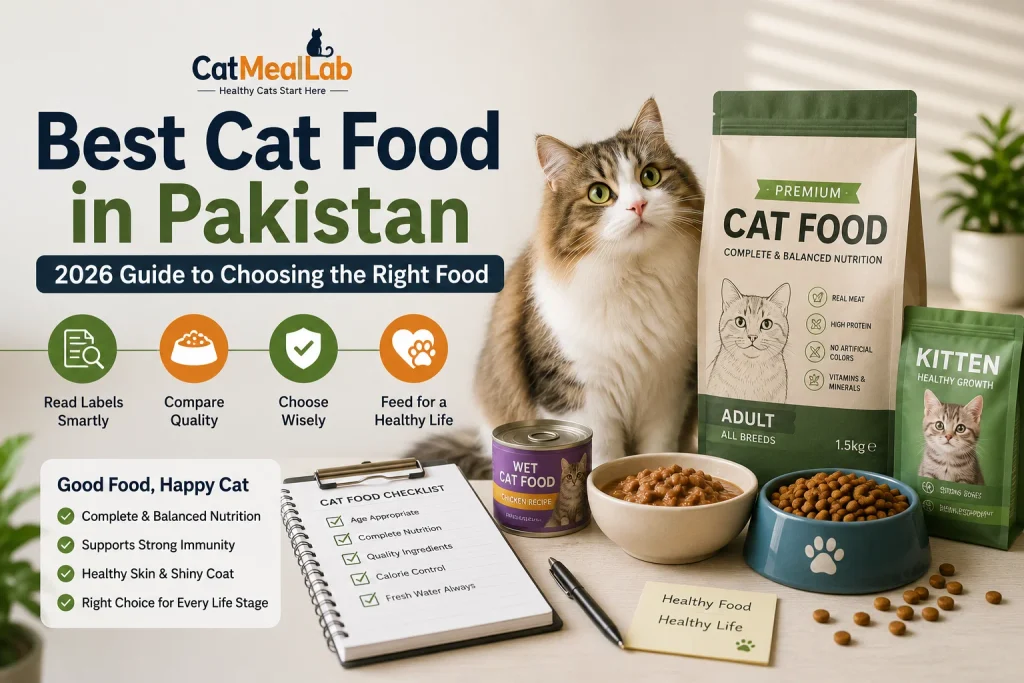
Choosing cat food can become surprisingly confusing. Walk into a pet store or browse an online marketplace in Pakistan and you may find dozens of products with different prices, ingredients, package sizes, age categories, and nutritional claims. For a cat owner, the challenge is not simply finding food—it is knowing which option is genuinely suitable for the individual cat.
When people search for BEST CAT FOOD IN PAKISTAN, they often expect a simple list of brands. However, there is no single product that is automatically perfect for every cat. A healthy choice depends on age, body condition, lifestyle, nutritional requirements, food preferences, budget, and any existing health concerns. CatMealLab takes a practical approach by helping owners understand how to evaluate these factors before making a purchase.
Why Choosing the Right Cat Food Matters
Food is one of the most important parts of everyday feline care. A cat’s diet provides the energy and nutrients required for normal body functions, muscle maintenance, tissue repair, and overall wellbeing.
Unlike humans, cats have highly specific nutritional requirements. Their bodies are adapted to a carnivorous diet, and they depend on certain nutrients that must be obtained through food.
A good feeding decision should therefore consider more than the attractive packaging or a product’s popularity.
Before buying a new formula, ask:
- Is it appropriate for my cat’s age?
- Does it provide complete and balanced nutrition?
- Is the calorie level appropriate?
- Does my cat actually tolerate it well?
- Is the food practical for my budget?
- Can I store it safely?
- Will I be able to purchase it consistently?
These questions can prevent many common feeding mistakes.
The First Step: Know Your Cat
Before comparing products, understand the cat you are buying food for. Two cats living in the same home may have completely different nutritional requirements.
Age
A growing kitten needs nutrition that supports rapid development. An adult cat generally requires maintenance nutrition, while an older cat may have changing energy and nutritional needs.
Always check whether the product is formulated for kittens, adults, seniors, or multiple life stages.
Activity Level
An active cat may use more energy than a sedentary indoor cat.
For example, a cat that spends considerable time running, climbing, and playing may have different calorie requirements from an indoor cat that sleeps for most of the day.
This is why feeding amounts should not be copied from another cat simply because the cats appear similar in size.
Body Condition
Body condition is another important consideration.
If a cat is carrying excess weight, simply providing unrestricted access to food may make the problem worse. Conversely, unexplained weight loss should not automatically be addressed by giving larger portions.
A sudden change in body weight can sometimes indicate an underlying health issue and should be discussed with a veterinarian.
Understanding the Difference Between Dry and Wet Food
One of the first choices cat owners face is whether to purchase dry kibble, moist food, or a combination.
Neither format is universally superior. The appropriate choice depends on nutritional quality, hydration, the cat’s preferences, lifestyle, and individual circumstances.
Dry Food
Dry food is popular because it is convenient.
It is generally:
- Easy to measure
- Convenient to store
- Less messy
- Practical for regular feeding
- Available in different formulations
However, dry food contains considerably less moisture than wet food. Cats consuming predominantly dry diets should have reliable access to fresh drinking water.
Portion control is also important because some cats will continue eating when food is freely available.
Wet Food
Wet food has a high moisture content, which can help increase overall water intake.
Many cats also find moist textures and strong aromas appealing. This can be particularly useful for cats that are selective eaters.
The disadvantages are mainly practical. Opened wet food requires appropriate storage, and unused portions should be handled according to the manufacturer’s recommendations.
Combining Both
Some owners choose to include both formats in a cat’s routine.
A combination can provide variety while allowing the convenience of dry food and the higher moisture content of wet food.
The important point is to calculate the overall amount rather than treating wet and dry meals as completely separate calorie sources.
How to Compare Cat Food Before Buying
Instead of choosing the first product that looks premium, compare several factors.
1. Nutritional Completeness
Check whether the product is intended to provide complete nutrition for the relevant life stage.
Some products are treats, toppers, snacks, or complementary foods. These should not automatically be used as the main diet.
2. Protein Sources
Cats require adequate protein as part of a balanced diet.
Look at the ingredient information to understand the major sources of protein. A clearly identified animal ingredient can provide useful information about the formulation.
However, judging an entire product from one ingredient alone can be misleading. The complete nutritional profile matters.
3. Calorie Density
Calories are easy to overlook.
A food may appear inexpensive per package but contain different calorie levels compared with another product. Feeding quantity can therefore affect the actual daily cost.
Instead of asking only, “How much does this bag cost?” consider:
How many days will this package realistically feed my cat?
This provides a more useful comparison.
4. Feeding Instructions
Manufacturers usually provide feeding guidelines based on body weight and other factors.
These are starting points rather than guaranteed requirements for every individual cat.
Monitor your cat’s body condition and adjust portions appropriately. If your cat has a medical condition, professional veterinary advice should take priority.
Three Important Terms for Better Food Research
Understanding common terminology can make online research much easier.
High-protein cat food refers to diets designed with a relatively high proportion of protein, an important nutrient for feline health.
Wet cat food refers to moist commercial food commonly sold in cans, pouches, trays, or similar packaging.
Cat food brands refers to manufacturers and product ranges offering different formulas based on age, nutritional requirements, preferences, and dietary purposes.
These terms can help owners compare products without becoming dependent on advertising claims.
Don’t Choose Cat Food Only by Price
Budget is a genuine concern for many families, but the cheapest package is not always the cheapest feeding option.
Suppose one product has a lower purchase price but requires a larger daily serving, while another costs more initially but provides more calories per appropriate serving. The actual daily cost could be quite different.
A better comparison considers:
Package price + feeding quantity + package size + calorie density + nutritional suitability.
You should also consider whether your cat tolerates the food well. A product that repeatedly causes digestive problems may not be a sensible long-term choice, even if it is inexpensive.
Buying Cat Food in Lahore: Practical Considerations
Cat owners in Lahore have access to different pet stores, supermarkets, online sellers, and imported products. Availability can vary considerably between sellers.
Before committing to a particular formula, consider whether it is realistically available on a regular basis.
This is especially important if your cat does well on a specific diet. Constantly changing products because a particular package is unavailable can sometimes create unnecessary digestive disruption.
Check the Packaging
When purchasing food, inspect the package carefully.
Look for:
- Product name
- Intended life stage
- Ingredient information
- Feeding guidelines
- Net weight
- Expiry or best-before information
- Manufacturer details
- Packaging condition
Avoid purchasing products with damaged packaging, broken seals, unusual odors, or questionable storage conditions.
Be Careful With Imported Products
Imported products can be excellent options, but owners should still verify product information rather than assuming that a higher price guarantees better quality.
Check the original packaging and nutritional information whenever possible.
How to Store Cat Food Properly
Buying good food is only part of the process. Storage can also affect food quality.
Dry Food Storage
Keep dry food in a cool, dry place away from direct sunlight and excessive heat.
After opening the package, keep it properly sealed. An airtight container can help reduce exposure to air and moisture.
Avoid placing large quantities of food near a hot appliance or in an area exposed to humidity.
Wet Food Storage
Once wet food is opened, follow the manufacturer’s storage recommendations.
Unused portions generally need appropriate refrigeration. Use clean utensils and avoid allowing opened food to remain exposed unnecessarily.
During Lahore’s warmer months, extra care with food handling is particularly important.
How to Introduce a New Food
One of the most common mistakes is changing food overnight.
Even when the new product is nutritionally appropriate, a sudden change can cause digestive problems in some cats.
A gradual transition is usually easier.
For example, you can begin by mixing a small amount of the new food with the existing food, then gradually increase the proportion of the new formula while reducing the old one.
The transition period may vary between cats. If your cat develops persistent vomiting, diarrhea, refuses food, or appears unwell, stop experimenting with multiple foods and seek veterinary advice.
Watch Your Cat After Changing Food
Your cat’s response can tell you a lot.
After introducing a new diet, monitor:
- Appetite
- Stool consistency
- Energy level
- Body weight
- Coat condition
- Vomiting
- Drinking habits
- Overall behavior
A positive response does not necessarily prove that one food is universally better than another. However, consistent appetite, healthy body condition, normal digestion, and good overall wellbeing are useful signs.
Common Buying Mistakes Cat Owners Make
Mistake 1: Choosing Based Only on Packaging
Beautiful packaging does not guarantee that a food is the right choice.
Read the nutritional information and product description rather than relying entirely on images and marketing language.
Mistake 2: Assuming Expensive Means Better
Price can reflect ingredients, manufacturing, packaging, import costs, distribution, and other factors.
But an expensive product is not automatically appropriate for every cat.
Mistake 3: Ignoring Portion Size
Owners sometimes focus on the price of the package while overlooking how much food the cat needs every day.
Daily feeding quantity is much more useful when comparing long-term costs.
Mistake 4: Giving Too Many Treats
Treats can be useful for bonding and training, but excessive treats can contribute unnecessary calories.
The main diet should remain nutritionally balanced.
Mistake 5: Changing Food Too Frequently
Cats can become accustomed to a particular texture, smell, and flavor.
Frequent unnecessary changes may make feeding more difficult and can contribute to digestive upset in sensitive cats.
Mistake 6: Ignoring Water Intake
Fresh water should always be available.
Some cats prefer drinking from fountains, while others are perfectly comfortable with a traditional bowl. The goal is to make clean water easily accessible.
How to Build a Practical Feeding Routine
A consistent routine can make feeding easier for both the cat and the owner.
Start by determining the appropriate daily amount according to the product’s feeding guidance and your cat’s individual needs.
Divide the daily amount into suitable meals instead of repeatedly adding food whenever the bowl becomes empty.
For cats that tend to overeat, measured portions can be particularly useful.
For multi-cat households, monitor individual cats when possible. One cat may consume another cat’s food, making it difficult to determine how much each animal is actually eating.
What About Homemade Cat Food?
Homemade food may seem like a natural alternative, but creating a nutritionally complete feline diet is more complicated than simply cooking meat.
Cats require specific vitamins, minerals, amino acids, fatty acids, and other nutrients in appropriate proportions.
A homemade diet that lacks important nutrients can create problems over time.
If you want to feed a homemade diet as the primary food source, discuss the plan with a veterinarian or qualified veterinary nutrition professional rather than relying on an informal recipe.
When a Special Diet May Be Necessary
Not every cat should follow a standard maintenance diet.
Some cats may require veterinary guidance because of conditions involving the kidneys, urinary tract, digestive system, blood glucose, allergies, or other health concerns.
In these situations, food selection should be based on the cat’s medical needs.
Do not assume that an online recommendation is appropriate for a cat with a diagnosed disease.
Signs That Deserve Veterinary Attention
Contact a veterinarian if your cat experiences persistent:
- Vomiting
- Diarrhea
- Appetite loss
- Weight loss
- Excessive thirst
- Changes in urination
- Difficulty eating
- Lethargy
- Unusual behavior
Cats often hide signs of illness, so significant changes should not be ignored.
A Simple Cat Food Buying Checklist
Before purchasing a new product, ask yourself these questions:
Is it suitable for my cat’s life stage?
A kitten, adult, and senior cat may require different nutritional profiles.
Is it a complete diet?
Make sure the product is appropriate as a primary food rather than simply a treat or complementary product.
Can I afford it consistently?
A sustainable feeding routine is generally more practical than choosing a product that becomes difficult to purchase every month.
Does my cat tolerate it?
Observe digestion, appetite, body condition, and overall behavior after a gradual transition.
Can I store it properly?
Consider your home’s temperature, available storage space, and the product’s packaging.
Is veterinary advice necessary?
If your cat has a health condition or unexplained symptoms, professional guidance should come before changing diets.
Why CatMealLab Takes a Practical Approach
CatMealLab believes cat food decisions should be based on evidence, nutritional suitability, and the individual needs of each cat rather than marketing hype.
For cat owners in Lahore and elsewhere in Pakistan, the goal should not simply be to find the most expensive or most popular product. The better goal is to identify a nutritionally appropriate food that fits the cat’s life stage, lifestyle, health needs, feeding routine, and the owner’s practical budget.
A good feeding decision also involves proper storage, portion control, hydration, gradual transitions, and regular observation.
Conclusion
Selecting cat food is ultimately about matching the food to the cat—not simply choosing a famous package from a shelf. Consider nutritional completeness, life stage, protein sources, calorie density, moisture, feeding quantities, storage requirements, price, availability, and your cat’s individual response.
For owners researching BEST CAT FOOD IN PAKISTAN, the most useful strategy is to compare products carefully and make decisions based on nutritional needs rather than advertising claims alone. A food that works well for one cat may not be the ideal choice for another.
CatMealLab recommends taking a balanced, practical approach: understand your cat, read the label, introduce changes gradually, control portions, provide fresh water, store food correctly, and consult a veterinarian whenever health concerns arise.
FAQs
1. How do I choose the right cat food for my cat?
Start with your cat’s age, body condition, activity level, and health status. Then compare complete nutritional information, ingredients, calorie content, feeding guidelines, and whether the product is appropriate for your cat’s life stage.
2. Is expensive cat food always better?
No. A higher price does not automatically mean a food is more suitable. Compare nutritional quality, calorie density, feeding amounts, ingredient information, and your cat’s individual tolerance before making a decision.
3. How should I change my cat’s food?
Introduce the new food gradually rather than replacing the old food suddenly. Increase the proportion of the new food over several days while monitoring appetite and digestion.
4. When should I ask a veterinarian about my cat’s diet?
Veterinary advice is especially important if your cat has a diagnosed medical condition or develops unexplained weight loss, persistent vomiting, diarrhea, appetite changes, excessive thirst, urinary changes, or difficulty eating.




Short URL: https://dmtstudents.com/SEO-M30-8/?p=540


 Posted by admin
on Aug 27 2026. Filed under Cat Nutrition.
You can follow any responses to this entry through the RSS 2.0.
You can leave a response or trackback to this entry
Posted by admin
on Aug 27 2026. Filed under Cat Nutrition.
You can follow any responses to this entry through the RSS 2.0.
You can leave a response or trackback to this entry