


What Should You Do Before Same Day Sewer Backup Plumbing Service Arrives in 2026?
What Should You Do Before Same Day Sewer Backup Plumbing Service Arrives in 2026?
Name: Cape May Plumbers Team
Designation: Local Plumbing Experts
A same day sewer backup plumbing service can help control a serious plumbing emergency, but what you do before the plumber arrives can make a significant difference. A sewer backup can expose your home to contaminated water, unpleasant odors, structural damage, and potential health hazards. If you are experiencing a sewer backup in Cape May, NJ, taking immediate and sensible precautions can help protect your property while Cape May Plumbers prepares to diagnose and resolve the problem.
Understanding a Sewer Backup Emergency
A sewer backup occurs when wastewater cannot properly flow through the sewer system and begins returning through drains, toilets, tubs, or other plumbing fixtures. The problem may originate from a blocked sewer line, damaged pipe, tree-root intrusion, grease accumulation, collapsed piping, or problems within the municipal sewer system.
Unlike an ordinary clogged drain, a sewer backup can affect multiple fixtures throughout a property. If wastewater is appearing in several drains at once, the main sewer line may be involved.
For Cape May homeowners and businesses, responding quickly is particularly important because standing wastewater can damage flooring, walls, furniture, and other belongings.
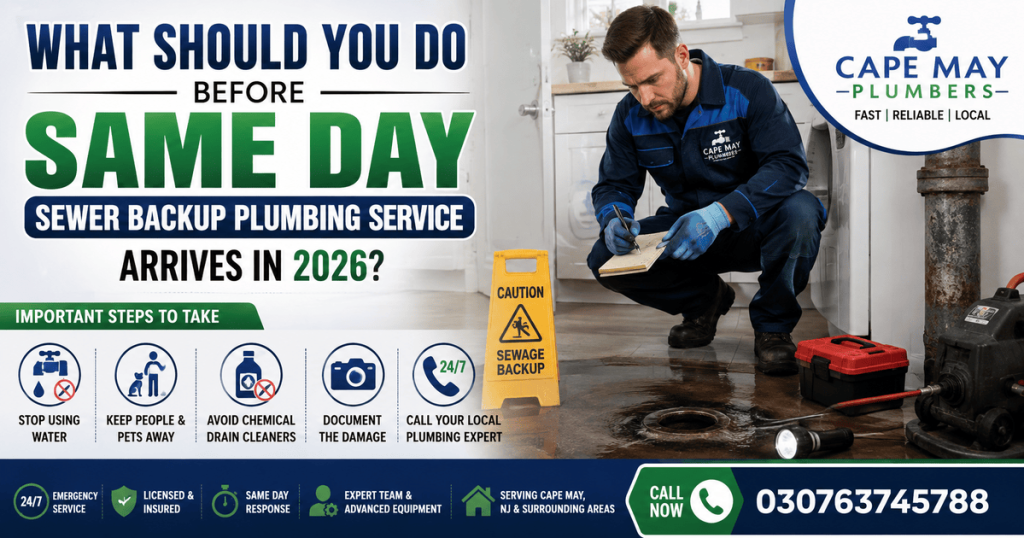
1. Stop Using Water Immediately
One of the first things you should do is stop using water throughout the property.
Avoid:
- Flushing toilets
- Taking showers
- Running washing machines
- Using dishwashers
- Running faucets unnecessarily
- Using other water-consuming appliances
Every additional gallon of water entering the plumbing system can increase pressure on a blocked sewer line and potentially cause more wastewater to back up.
If multiple fixtures are backing up simultaneously, treat the situation as a potential main sewer line problem rather than attempting to solve it like a normal sink clog.
2. Keep People and Pets Away From Contaminated Water
Sewer backup water may contain bacteria, pathogens, chemicals, and other contaminants. Do not allow children or pets to enter affected areas.
If wastewater has reached living spaces, keep the area isolated until the source has been addressed and appropriate cleaning or remediation can take place.
Avoid unnecessary contact with sewage. If contact occurs accidentally, wash exposed skin thoroughly with soap and clean water.
3. Avoid Using Chemical Drain Cleaners
It may be tempting to pour a commercial drain cleaner into a backed-up drain while waiting for professional help. However, this can create additional problems.
Chemical drain cleaners may:
- Fail to remove a major sewer obstruction
- Damage certain plumbing components
- Create dangerous fumes
- Increase risks for anyone working on the plumbing afterward
A professional plumber can determine whether the obstruction requires mechanical cleaning, hydro jetting, inspection, repair, or another appropriate solution.
4. Turn Off Electricity in Affected Areas When Necessary
Water and electricity create a serious safety risk. If sewage or water has reached electrical outlets, appliances, extension cords, or electrical equipment, do not enter the affected area to manipulate electrical components.
If it is safe to do so without entering standing water, electricity to the affected area may need to be shut off. Otherwise, contact a qualified electrician or emergency professional.
Never take unnecessary risks simply to protect belongings.
5. Protect Valuable Belongings
If you can safely access an unaffected area, move important belongings away from potential water damage.
Consider protecting or relocating:
- Important documents
- Electronics
- Furniture
- Rugs
- Clothing
- Children’s belongings
- Valuable personal items
Do not walk through contaminated water simply to retrieve possessions. Personal safety should take priority over property.
6. Document the Damage
Before cleanup begins, take photographs or videos of visible damage when it is safe to do so.
Document:
- Where the backup occurred
- The affected rooms
- Damaged flooring and walls
- Damaged furniture
- Plumbing fixtures involved
- Visible sewage or wastewater
- Any property that has been affected
This documentation can help you maintain a record of the incident and may be useful when communicating with your insurance provider.
7. Identify Which Fixtures Are Affected
Pay attention to which plumbing fixtures are experiencing problems.
For example, note whether:
- Only one toilet is overflowing
- Several toilets are affected
- Multiple drains are backing up
- Water rises when another fixture is used
- Basement drains are overflowing
- Sewer odors are present
- Wastewater is appearing in tubs or showers
Providing these details to the plumber can help with the initial assessment.
8. Check for Obvious, Safe-to-Observe Causes
Do not dismantle plumbing components while waiting for professional assistance. However, you can observe the situation and note anything unusual.
Possible warning signs include:
- Slow drainage throughout the property
- Gurgling toilets
- Repeated drain clogs
- Unusual sewer odors
- Water backing up from floor drains
- Multiple fixtures draining slowly
- Previous sewer line problems
These symptoms can provide valuable clues about the underlying issue.
9. Prepare Information for the Plumber
When the plumber arrives, provide as much useful information as possible.
Tell them:
- When the backup started
- Which fixtures are affected
- Whether the problem has happened previously
- Whether heavy rainfall occurred recently
- Whether you noticed slow drains beforehand
- Whether you attempted any drain treatment
- Whether wastewater has entered living areas
Detailed information can help the technician develop a more efficient diagnostic approach.
10. Do Not Attempt Major Repairs Yourself
A sewer backup can involve underground or concealed plumbing infrastructure. Attempting to remove a main sewer blockage without appropriate equipment and experience can make the situation worse.
Professional plumbers may use specialized equipment such as sewer cameras, drain-cleaning machines, locating equipment, and hydro-jetting systems to determine the condition of the line and address appropriate blockages.
The right solution depends on the actual cause rather than simply the visible symptoms.

What Causes Sewer Backups in Cape May, NJ?
Understanding common causes can help property owners recognize warning signs earlier.
Tree Root Intrusion
Roots can enter small cracks or joints in underground sewer pipes. As roots grow, they can restrict wastewater flow and eventually contribute to severe blockages.
Grease and Debris
Improperly disposed grease, wipes, paper products, and other materials can accumulate inside sewer lines.
Damaged or Collapsed Pipes
Aging, shifting, corrosion, ground movement, or other factors can damage underground sewer infrastructure.
Heavy Rainfall
Excessive rainfall can place additional pressure on sewer systems and contribute to backups in vulnerable properties.
Blocked Main Sewer Line
A blockage in the property’s main sewer line can prevent wastewater from leaving the building normally. When this happens, several fixtures may be affected simultaneously.
Why Professional Diagnosis Matters
The visible backup is often only the symptom. The actual problem may be located several feet—or much farther—inside the sewer line.
A professional evaluation can help determine whether the problem involves:
- A localized blockage
- A main sewer line obstruction
- Root intrusion
- Pipe damage
- A collapsed section
- Improper pipe connections
- A recurring drainage problem
This is where experience, appropriate equipment, and systematic diagnosis become important.
E-E-A-T: Why Experience and Expertise Matter
For an emergency plumbing topic, E-E-A-T (Experience, Expertise, Authoritativeness, and Trustworthiness) should be reflected throughout the content and service experience.
Experience: A professional plumbing company should understand the practical challenges associated with sewer backups, including emergency response, property protection, and difficult drainage conditions.
Expertise: Proper sewer diagnosis requires knowledge of drainage systems, pipe configurations, blockage types, inspection techniques, and appropriate repair methods.
Authoritativeness: A reputable plumbing company should provide clear service information, transparent communication, and professionally informed recommendations rather than promising a one-size-fits-all solution.
Trustworthiness: Customers should receive honest explanations of the suspected problem, recommended work, and available options. Emergency situations should never be an excuse for misleading claims or unnecessary repairs.
For homeowners searching for a same day sewer backup plumbing service in Cape May, NJ, these factors can help distinguish a qualified professional from an unreliable service provider.
Building Topical Authority Around Sewer Backup Plumbing
A strong plumbing resource should address the complete topic rather than focusing only on the keyword “sewer backup plumber.” Related topics include sewer line repair, emergency drain cleaning, sewer camera inspection, clogged main sewer lines, sewage cleanup, pipe replacement, root intrusion, hydro jetting, sewer maintenance, and preventive plumbing care.
This broader topical coverage helps readers understand the entire sewer backup process—from recognizing early warning signs and protecting the property to professional diagnosis, repair, and prevention.
For Cape May Plumbers, providing comprehensive information about sewer emergencies can help homeowners make informed decisions when an urgent plumbing problem occurs.
What to Do After the Plumber Arrives
Once the plumbing professional arrives, explain what happened and show them the affected areas. Ask what they believe is causing the backup and what diagnostic process they recommend.
Depending on the situation, the plumber may inspect the drainage system, locate the blockage, clear the obstruction, inspect the sewer line, or recommend additional repairs.
If wastewater has contaminated interior areas, plumbing repair and property cleanup may be separate stages. The plumbing issue should be addressed before contaminated areas are fully restored.
Final Thoughts
Knowing what to do before a same day sewer backup plumbing service arrives can help reduce additional damage and keep everyone safer. Stop using water, keep people and pets away from contaminated areas, avoid chemical drain cleaners, protect valuable belongings when safe, document the damage, and provide the plumber with detailed information about the problem.
For homeowners and businesses in Cape May, NJ, prompt professional attention is especially important when wastewater is entering the property or multiple plumbing fixtures are affected. Cape May Plumbers can help property owners approach sewer backup problems with a professional, systematic solution rather than relying on temporary fixes.
Frequently Asked Questions
1. What should I do first during a sewer backup?
Stop using water throughout the property and keep people and pets away from contaminated wastewater. Contact a qualified plumbing professional for assistance.
2. Can I use a chemical drain cleaner before the plumber arrives?
It is generally better to avoid chemical drain cleaners during a serious sewer backup. They may not resolve a main-line blockage and can create additional hazards for anyone working on the plumbing.
3. How do I know if my main sewer line is blocked?
Multiple affected fixtures, simultaneous drain backups, gurgling toilets, sewage coming through floor drains, and widespread slow drainage can indicate a main sewer line problem.
4. Can a sewer backup cause property damage?
Yes. Sewage and wastewater can damage flooring, drywall, furniture, personal belongings, and other parts of a property. Contaminated water can also create sanitation concerns.
5. Why should I choose same-day sewer backup plumbing service?
Prompt professional service can help identify the source of the backup sooner, restore proper drainage, and reduce the opportunity for additional wastewater damage.




Short URL: https://dmtstudents.com/SEO-M30-10/?p=147


 Posted by admin
on Aug 14 2026. Filed under Blog, sewer backup plumber.
You can follow any responses to this entry through the RSS 2.0.
You can leave a response or trackback to this entry
Posted by admin
on Aug 14 2026. Filed under Blog, sewer backup plumber.
You can follow any responses to this entry through the RSS 2.0.
You can leave a response or trackback to this entry